
Currently Empty:


website bezoeken nařizuje pro každý nový účet absolvovat nastavení dvoufázového přihlášení před může začít hraní za skutečné peníze. Proces kombinuje standardní uživatelské jméno a heslo s extra verifikačním kódem zaslaným pomocí SMS nebo vygenerovaným aplikací pro ověřování. Uživatelé v Nizozemsku obdrží toto nařízení automaticky jakmile dojde ke schválení registrace, a kasino ho uplatňuje při veškerém dalším pokusu o přihlášení. Následující části procházejí registraci účtu, verifikaci identity, reset hesla a konkrétní postupy vyžadované k aktivaci a administraci dvoufázového ověřování na počítači i mobilu.
Regulatory Context for Players in the Netherlands
Internet casinos licensed in the Netherlands must comply with the Remote Gambling Act overseen by the Kansspelautoriteit. klik en lees meer 2FA is one of the mandatory technical safeguards outlined in the licensing conditions. Kansino Casino publishes an annual security audit summary on its responsible gambling page, verifying that the two-factor system undergoes penetration testing no fewer than twice per calendar year. Netherlands-based players can ask for a copy of the latest audit scope by emailing compliance@kansino.nl, however the document withholds specific vulnerability findings.
Identity Validation and Know Your Customer Requirements
Kansino Casino complies with Dutch gambling regulations that require full Know Your Customer checks before any deposit or withdrawal. Players submit a government-issued photo ID such as a passport or Dutch driving licence, plus a recent proof-of-address document issued within the last three months. Valid address proofs include a utility bill, council tax statement, or bank statement that clearly shows the player’s full name and current residential address in the Netherlands. The verification team normally finishes manual review within one to two working days, after which an email notifies that the account status has moved from “pending” to “verified.” Until verification is finalized, the two-factor login option remains unavailable and deposit limits stay at zero.
Document Quality Criteria
Scans or photographs must be in colour, show all four corners of the document, and remain legible under normal screen zoom. Blurry images or screenshots of another screen are rejected automatically, requiring a resubmission that can add another day to the approval timeline. Players are advised to use the device camera rather than a scanner app, because direct photographs preserve the holographic security features that the verification team checks. If a submitted document expires during the review period, the system demands a fresh copy before final approval.
Age and Residency Checks
The minimum legal age for real-money gambling in the Netherlands is 18. Kansino Casino cross-references the date of birth on the ID against the national registry extract that forms part of the address document. Any mismatch between the two records halts verification and triggers an email request for clarification. Residency is confirmed by the presence of a Dutch postcode and the issuing authority listed on the proof-of-address document; foreign documents without a Dutch address are refused even if the player holds dual citizenship.
Protection Systems Beyond Two-Factor Login
Kansino Casino stores all passwords in encrypted form using the bcrypt algorithm, stopping direct retrieval even by internal staff. Login attempts from foreign countries generate an additional email alert including the IP address, approximate location, and browser fingerprint. Dutch players who travel abroad get these alerts routinely; verifying the attempt through the email link preserves the session active, while marking it as suspicious requires an immediate password reset and two-factor re-verification.
Inactivity Limits and Automatic Logout
Active sessions time out after thirty minutes of inactivity on desktop browsers and after fifteen minutes on mobile browsers. The shorter mobile timeout accounts for the higher likelihood of shared or public Wi-Fi networks. Any attempt to continue an expired session redirects the player to the two-factor code screen rather than directly into the account, minimizing the risk of session hijacking on unattended devices.
Common Two-Factor Issues and Possible Fixes
Customers sometimes report that SMS codes arrive late or not at all. The primary troubleshooting step is to verify that the Dutch mobile number in the profile still matches the SIM currently in use. If the number is correct, toggling airplane mode or requesting a new code after sixty seconds solves most delivery delays caused by network congestion. When codes keep to fail, switching temporarily to the authenticator app method bypasses dependence on SMS routing.
Authentication App Reinstallation
Removing and reinstalling an authenticator app removes the stored secret key, causing future codes invalid. The correct recovery path is to use one of the ten backup codes printed during initial setup. Once inside the account, the player can capture a fresh QR code and reconnect the app without contacting support. If all backup codes have already been used, the live chat team can generate a new set after authenticating identity through uploaded photo ID and a short video call displaying the player holding the ID next to their face.
Changing Registered Phone Numbers
When a Dutch player obtains a new mobile number, the profile update page permits entry of the replacement number followed by an SMS confirmation code sent to the old number. If the old number is no longer active, support can manually override the change after the player uploads a recent phone contract or provider invoice that displays the new number and account holder name. The override process typically finishes within one working day.
Setting up a New Kansino Casino Account
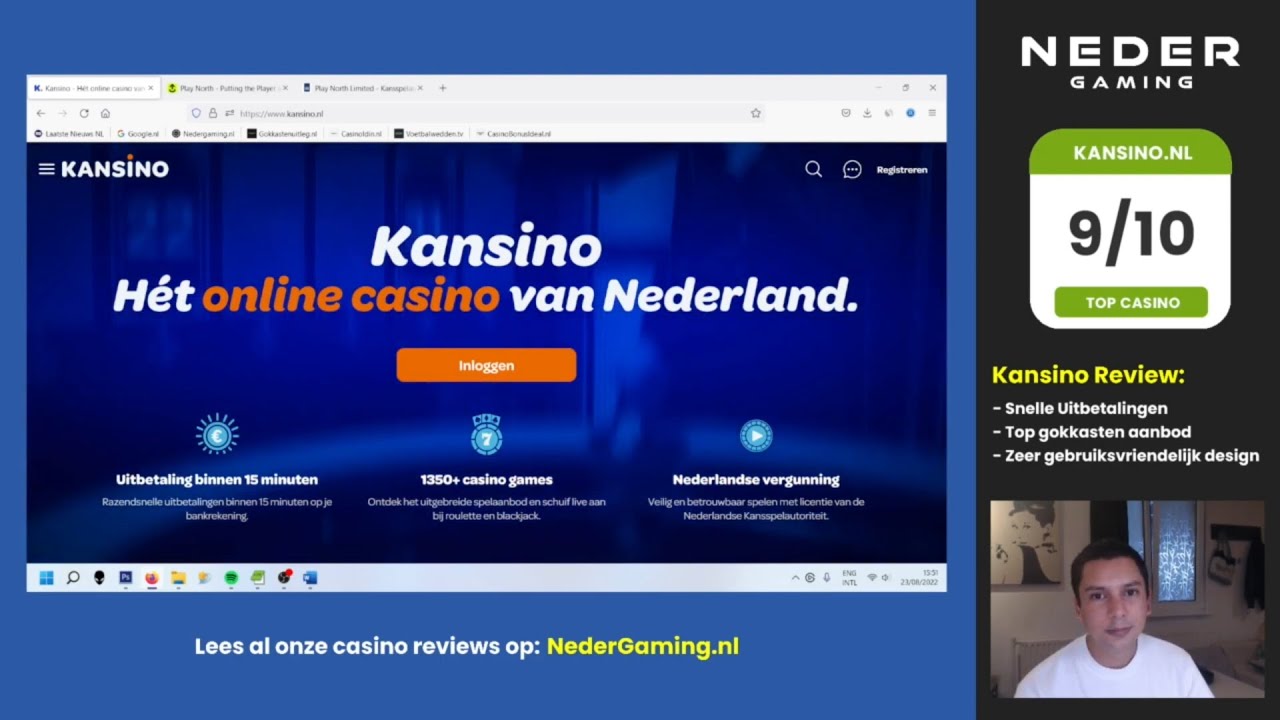
Enrollment commences on the primary Kansino Casino site when a player clicks the prominent “Register” button. The form requires an email address, a chosen username, a robust password, and the player’s date of birth. After the preliminary details are submitted, the system sends a confirmation link to the provided email; clicking this link enables the basic account record. At this stage the account is created but remains restricted to demonstration mode until identity documents are uploaded and reviewed. Dutch residents must also select euros as their account currency during this initial visit, because the platform does not permit later currency changes once verification is finished.
Enabling Two-Factor Authentication
Once the account reaches verified status, the player can enable two-factor authentication from the security section of the account settings page. The first choice is between SMS delivery and an authenticator app. SMS delivers a six-digit code to the registered Dutch mobile number each time a login attempt is recognized. The authenticator app option requires scanning a QR code displayed on screen; the resulting time-based code updates every thirty seconds and does not rely on mobile network coverage. After activation, the system immediately tests the chosen method by requiring a valid code before allowing the settings page to close.
Transitioning Between SMS and App
Players may switch the two-factor method at any time by returning to the security settings page and selecting the alternative option. The platform turns off the previous method only after the new method has been successfully tested, ensuring that access is never lost during the transition. If a Dutch mobile number changes, the player must first update the number in the profile section and then re-verify it with a confirmation code before two-factor SMS can be re-enabled.
Emergency Codes for Emergency Access
During the initial two-factor activation, Kansino Casino produces ten single-use backup codes. Each code can stand in for a missing SMS or app code exactly once. The player is prompted to download or print these codes immediately; after the download window closes they cannot be recovered again. Storing a copy offline, such as on paper kept in a secure location, prevents lockout if the primary phone is lost or the authenticator app is uninstalled without prior deactivation.
Signing In With Two-Factor Protection
Registered users enter their user name and secret phrase on the sign-in page located at kansino-casino.net/nl-nl/login/. After the login details are verified, a second screen appears requiring the active verification code. For SMS users the code is delivered within thirty seconds under normal network conditions. Authenticator app users open their selected application and input the six-digit number displayed for Kansino Casino. The login session remains valid for twenty-four hours on the current device and browser unless the player intentionally terminates the session or deletes browser cookies.
Device Detection and Trusted Browsers
The platform includes an optional “remember this device” checkbox after the initial successful two-factor login. Checking this option sets a secure cookie that suppresses future code requests from the current browser for thirty days. The cookie is deactivated by itself if the player changes password, deletes browser data, or logs in from a new IP address range. Dutch players who access household computers are recommended to set the box unchecked to keep stricter control over each login attempt.
Account Termination and Record Keeping
Players who want to close their account permanently can submit a closure request through the account settings page. The site retains personal data for a five-year period after termination to satisfy Dutch tax and AML regulations. During this time the two-factor authentication secret stays stored in encrypted format; if the customer later reopens an profile, the former two-factor options are restored and must be checked again before access is allowed. Restoration uses the same document upload process employed for new registrations.
Dual-Factor Login on Mobile Devices
The Kansino Casino mobile site and dedicated apps both offer the same two-factor procedure used on desktop. On iOS and Android the on-screen keyboard can be utilized to enter codes, and most authenticator apps offer a copy-to-clipboard button that places the code directly into the login field. Users who turn on biometric login within the mobile app must still enter a two-factor code the first time the app is started after installation or after cache clearance; subsequent launches depend on the stored biometric token until the thirty-day trusted-device period ends.
Push Notification Option
Instead of typing a six-digit code, players using the official Kansino Casino app can approve a push notification that appears on their locked screen. Tapping “Approve” on the notification completes the second factor without keying. The notification contains the approximate location and device model attempting login, allowing the player to deny unexpected attempts directly from the lock screen. This method demands an active internet connection on the phone but does not use SMS credit.
Account Recovery Process
If a user loses the account password, the recovery link on the login page starts a three-step sequence. First, the registered email address obtains a time-limited reset token valid for two hours. Clicking the token displays a page where a new password must be entered twice and must fulfill the platform’s complexity rules: at least eight characters including one uppercase letter, one number, and one special character. After the password is changed, the system immediately needs a valid two-factor code before granting access, ensuring that password recovery alone cannot bypass the second factor.

Account Lockouts and Support Contact
Five consecutive failed login attempts within ten minutes result in a temporary lock lasting thirty minutes. During this window the player can still initiate password recovery but cannot attempt further logins. If the lock persists beyond the automatic release, or if two-factor codes repeatedly do not work, the live chat support team can manually clear the lock after verifying account ownership through security questions and the last four digits of the registered Dutch mobile number. Support operates daily between 08:00 and 01:00 CET.
Best Practices for Long-Term Security
Consistently examining the list of trusted devices in the security settings page assists spot unauthorised access early. Deleting old devices that are no longer used minimizes the attack surface. Players should also refresh their password every twelve months or immediately after any service reports a data breach involving similar credentials. Kansino Casino sends proactive email reminders when a password has remained unchanged for more than eighteen months, although the reminder does not force a change.